Processing techniques for isofloc cellulose insulation.

isofloc cellulose is a loose, fibrous insulant based on cellulose, processed with different techniques depending on the assembly, construction and requirements.
The choice of the right technique and the correct installation density are decisive for insulation that is durably settlement-proof, free of thermal bridges and safe in building-physics terms. All isofloc methods are designed for joint-free adaptation to the construction and homogeneous insulant distribution.
New construction of the future
Land is becoming scarce, building methods denser, and the demands on sustainable construction are rising. Timber construction provides the foundation — efficient, resource-friendly and high-performing, including in fire protection.
Natural insulants enable solutions that combine comfort, efficiency and climate impact.
Planning handbook PDF
Refurbish instead of replace
Rising energy requirements and the conscious use of resources put the renovation of existing buildings in focus. Instead of replacing them, structures can be developed efficiently — economically and sustainably.
isofloc cellulose insulant creates simple, material-efficient solutions that enable rapid implementation while preserving the building's character.
Planning handbook PDF
Processing of blow-in insulants
Unlike panel insulants, blow-in insulants are supplied in loose form. A blow-in machine loosens the material and blows it into cavities under controlled compaction. Compared with panel insulants, blow-in insulants offer unbeatable advantages that enable fast and economical work on site.
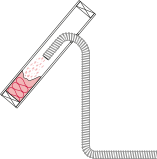
Hose blow-in method
Settlement-secure insulation of closed cavities
In the hose blow-in method the cellulose insulant is loosened by a blow-in machine and blown under air pressure through a hose into closed cavities. The hose is guided to the end of the bay and pulled back in a controlled way during insufflation. The insulant is thus compacted layer by layer and conforms tightly to the construction.
Only at this raw density is permanent settlement security and high air-flow resistance ensured.
Installation density: Vertical assemblies and pitched roofs: approx. 55–60 kg/m³
Advantages
- Joint-free, thermal-bridge-free insulation layer
- Diffusion-open and capillary-active
- Very good summer heat protection
- Reproducible execution quality
Suitable constructions
- Timber-frame and timber-stud walls
- Pitched roofs (between and below rafters)
- Closed ceiling and floor constructions
- Element construction in the factory or on site
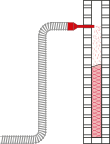
Nozzle blow-in method
Compacted blow-in with injection nozzles
The nozzle blow-in method is a pneumatic compaction process for closed cavities, especially in renovation or where access is limited. The insulant is introduced directly into the bay via injection nozzles. Full filling is achieved through several injection openings per assembly.
At this installation density a durably settlement-secure insulation is achieved, comparable to the hose blow-in method — provided the hole pattern and blow-in duration are correctly planned and executed.
Installation density: Vertical assemblies: ≈ 60 kg/m³
Planning notes
- Define number and position of injection openings in advance
- Take limited bay depths and wall heights into account
- Compaction quality depends on execution
Suitable constructions
- Existing timber-stud and lightweight walls
- Retrofit insulation with limited access
- Assemblies with shallow bay depth
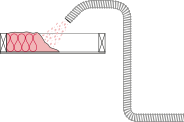
Open application
Loose insulation for horizontal assemblies
In open application the cellulose insulant is laid free and without compaction onto horizontal or slightly inclined surfaces. The method is particularly suited to large, unused areas without a closed construction.
Important limitation: This method is exclusively suitable for horizontal assemblies and must not be used in vertical constructions.
Installation density: approx. 30–40 kg/m³, allow for settlement margins
Suitable constructions
- Top-storey ceilings
- Inaccessible attics
- Suspended ceilings
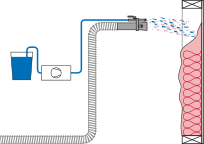
CSO method (Compact Spray-On)
Spray method for open vertical assemblies
The CSO method (Compact Spray-On) is a spray-application process for insulating open, vertical constructions, especially in renovation and interior fit-out. The isofloc cellulose insulant is applied openly and moistened with a fine water mist. The natural binding forces of the cellulose are activated, the material adheres self-supportingly to the surface. The surface is then levelled with a rotary brush. Once dry, a homogeneous, dimensionally stable and gap-free insulation layer remains, ready for further cladding.
Installation density: approx. 45 kg/m³
This installation density ensures:
- self-supporting execution in vertical position
- sufficient flow resistance
- reliable function in thermal and acoustic protection, material-efficient renovation solution
Suitable constructions
- Timber-stud and half-timbered walls
- Interior insulation in existing buildings
- Lining walls
- Renovations with open wall structure
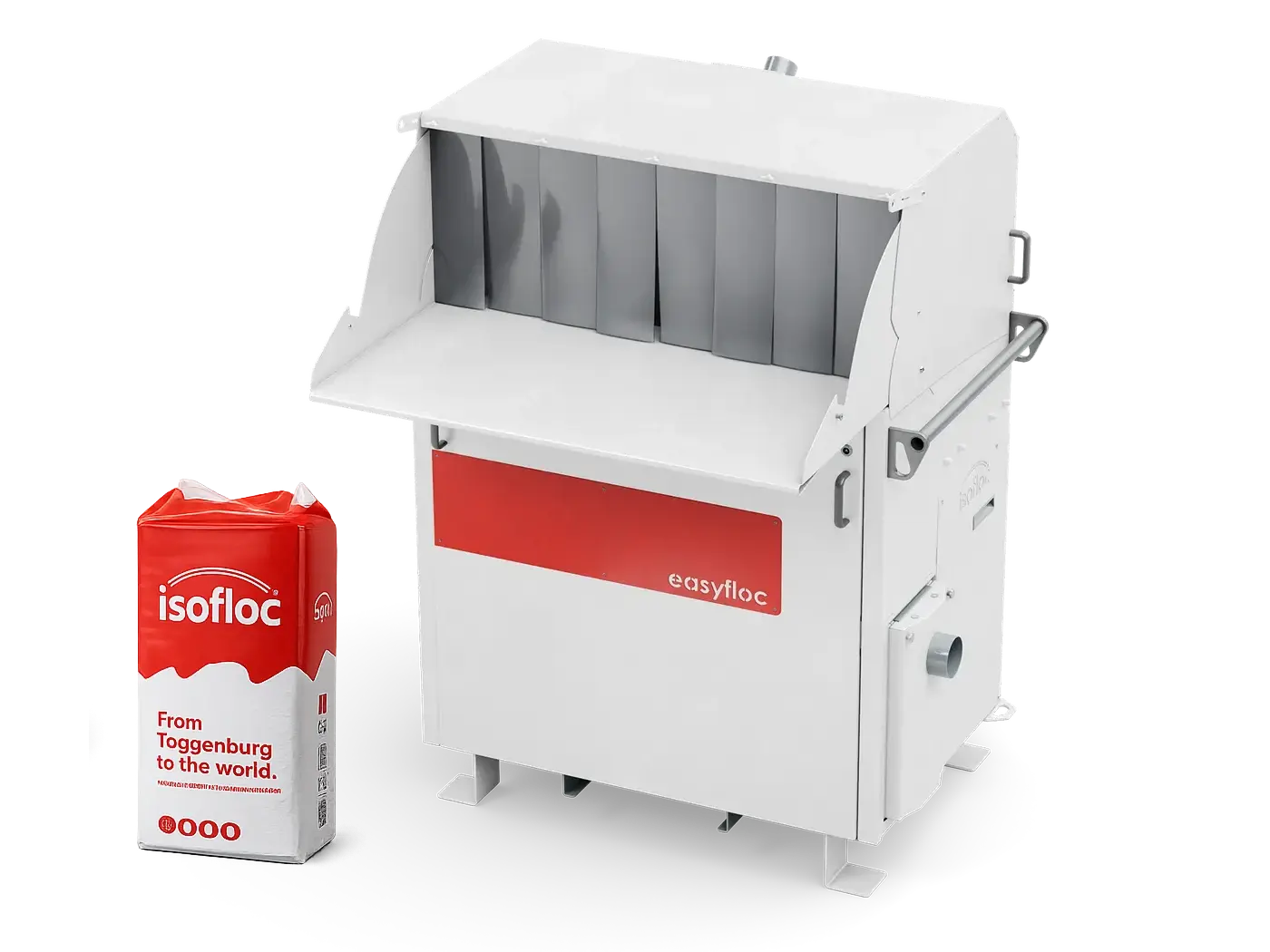
On-site blow-in machine
The compact solution for processing small bales directly on site. Flexible to use, easy to transport and quickly operational. Ensures a steady material flow and supports reliable execution across a wide range of applications.
On-site support Experience isofloc live.
We're happy to answer all your questions and take care of your needs personally — we look forward to meeting you!
isofloc® silencio
Acoustically effective spray technique for wall and ceiling surfaces
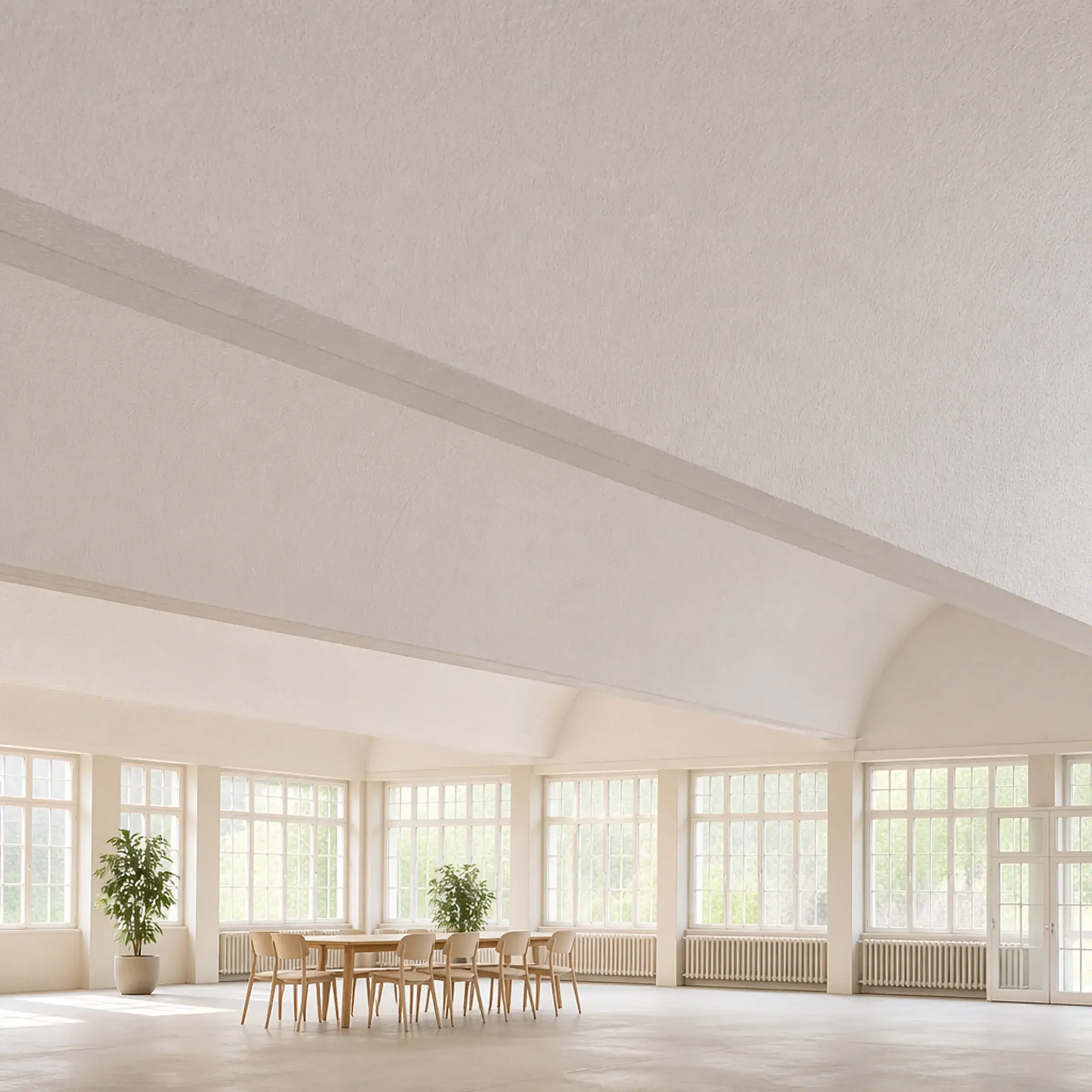
isofloc Silencio is an acoustically effective spray technique on a cellulose basis for targeted improvement of room acoustics.
The cellulose fibres are applied to wall or ceiling surfaces with specialised machinery and form a seamless, sound-absorbing surface that effectively reduces reverberation time. It is not a decorative spray coating, but a functional spray technique whose acoustic effect is defined by fibre structure, layer thickness and surface texture.
Advantages
- Ideal for renovations and existing buildings
- Very good levelling of uneven substrates
- Diffusion-open and moisture-balancing
- Joint-free adaptation to existing constructions
Areas of application
- Offices and administrative buildings
- Schools, kindergartens and educational buildings
- Commercial and industrial buildings
- Living spaces with elevated acoustic requirements